Throughout Fall 2020 to Fall 2021, I had an intense interest in mathematics, including elementary math (pedagogy), statistics, and discrete mathematics. After that, my interest shifted more towards computer science, while still reetaining interest in Discrete Math. In Spring 2022, Fall 2022, Spring 2023 and Spring 2024, I have been a teaching assistant for Discrete Math (CSCI 150) to show my love for discrete mathematics, and taught multiple recitation sections from Spring 2024 to Spring 2025. semesters. During my time teaching, I have provided weekly recitation slips to assess their understanding of the material.
Most of the information here are based on the work completed during June 2020 to July 2021.
Computer Science
I love computers and mathematics! So what is the output when the input is “computers” and “mathematics”? Computer science! Since high school, I wanted to become a software engineer (with programming!) to make various programs, apps, and websites. My favorite programming language is Python, because not only it is flexible on syntax, it comes with lots of packages such as matplotlib, NumPy, SciPy, pandas, turtles, and lots more! Python is best used for data science, especially if have tons of data to work with.
During my time at City Tech (2019 – 2021) and Hunter College (2021 – 2023), I made various Python and C++ programs to practice my programming skills, and then attend a few hackathons starting on Winter 2022.
One of my earliest projects I made is the image manipulation using Python. In this program, I ask the user for the image, the number of rows and columns, and the two color channels they want to remove. Here are some examples:
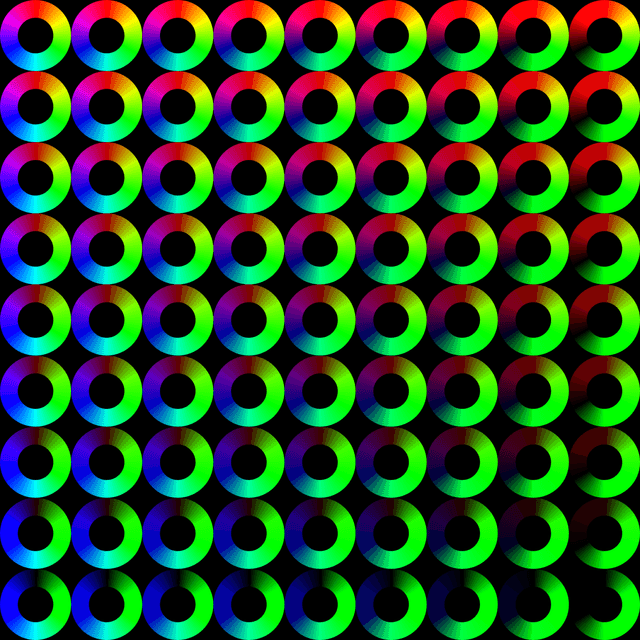
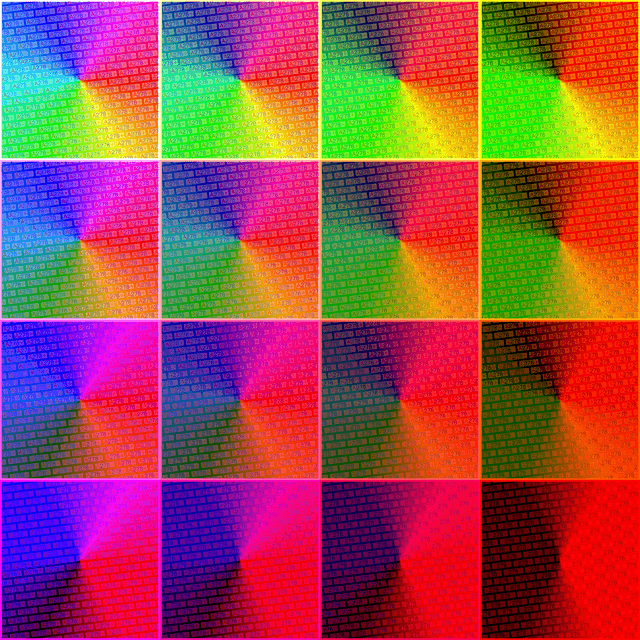
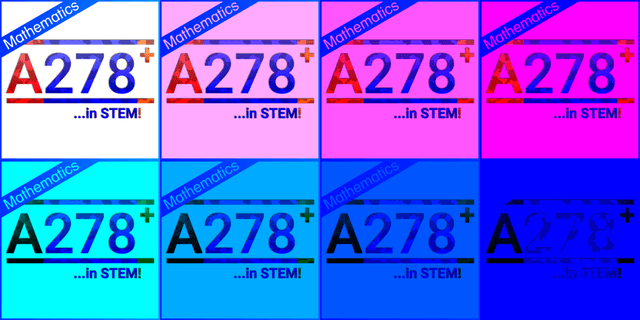

Take a look on my GitHub repository to see how I implemented these features: GitHub Repository (published October 5, 2021)
Data Analysis
After doing my statistics (MAT 1372) group project during the Spring 2020 semester, I have learned a lot of things about sampling and surveying, data analysis, and making inferences especially through surveys. While the group project was difficult to do (and didn’t collect enough data), I still enjoyed doing it, especially when I get the opportunity to collect data. The group project showed us that there are lots of real-life applications in the scientific world, and wasn’t done under a vacuum or only on a 50-year-old textbook.
Since I enjoyed collecting data since April 2020, I continued to do that through post-event surveys in Disney Magic Kingdoms (the park-building game I play every day). My post-event surveys have an average of 370 responses each (as of Update 50 event). The post-event surveys I conduct almost always follow a post-event presentation. Since I lost interest in the game, I stopped conducting these surveys after Update 55.
If you like to learn more about how I collect data through post-event surveys, you can see my resources here
On December 5th, 2025, I have conducted another survey regarding their opinion on TETR.IO Quick Play 2 mods, which are meant to challenge players. The survey was open until January 4th, 2026, and received a total of 32 responses. The presentation can be found here
Everyday Mathematics
Everyday Mathematics is an elementary math curriculum for Grades Pre-K to 6. Back in 2007, my elementary school used Everyday Mathematics (3rd edition), where mathematics spiraled, alternative algorithms are taught, and a wide range of topics are covered. I had great moments from the program, because there were lots of interesting things that broadened my knowledge of mathematics. My favorite thing about this program is that math-modeling routines: Frames-and-Arrows, What’s My Rule, and Name-Collection Boxes continue to be useful even in college-level math. In addition, some 5th/6th grade topics have the potential to be cross-compatible with certain redemial courses, due to common concepts shared with each other. As of May 31st, 2021, Everyday Mathematics is at it’s fourth edition, where the curriculum underwent significant changes.
You can read an 7-page paper about my love for Everyday Mathematics. Sample worksheets will not be included here due to copyright concerns:
MAA Weekly Math Wednesdays (2021)
In Summer 2021, James Tanton hosted six interesting math topics, designed for all ages. Most of these math topics in Weekly Math Wednesdays aren’t covered in regular curricula, so they are extra topics for those interested in mathematics. The following topics that were discussed in 2021 MAA Weekly Math Wednesdays were:
- WMW1: How Pointy Is a Polygon?
- WMW2: The Vinculum Numbers (non-vedic mathematics)
- WMW2A: The Vinculum Numbers (vedic mathematics)
- WMW3: Playing with Honeycombs
- WMW4: What to do if you believe in patterns?
- WMW5: Garden Paths
- WMW6: How to memorize all the digits of pi (3.1415926 …)?
For WMW #2, I wrote two different notes on vinculum numbers, one of them concerning vedic mathematics. On the July 28th, 2021 session, Dr. Tanton presented a non-vedic math version of vinculum numbers, in which they are used for grouping expressions. Therefore, vinculum numbers can be defined in many different ways.